General information, not personalised tax, legal or investment advice.
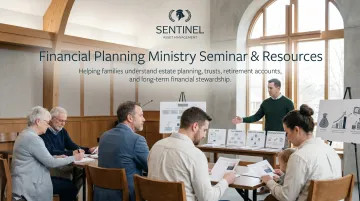
For families who own a home, maintain retirement accounts, or want to protect a loved one with special needs, this inaction carries serious consequences. Financial planning ministry seminars offer a rare, accessible solution—providing structured estate planning education at no cost, often with free trust document preparation to remove the most common barrier: upfront legal fees.
This post explains what these seminars cover, who they're designed for, what resources attendees receive, and how to turn seminar knowledge into lasting financial security.
Key takeaways:
- Financial planning ministry seminars offer free estate planning education through nonprofits and faith-based organizations
- Core topics include living trusts, probate avoidance, beneficiary planning, and special needs trusts
- Many seminars provide free or low-cost trust document preparation, removing financial barriers
- Attendees should follow up with comprehensive financial planning to integrate estate tools into retirement income strategies
- Sentinel Asset Management helps families align estate planning intentions with tax-efficient withdrawal strategies and coordinated financial planning
What Is a Financial Planning Ministry Seminar?
A financial planning ministry seminar is a structured, typically free 60–90 minute educational event hosted by nonprofits, churches, or civic organizations. These seminars walk everyday individuals through estate planning essentials: probate avoidance, living trust creation, and legacy protection.
They are not sales pitches or legal consultations. They are educational starting points — designed to give attendees the vocabulary and foundational knowledge to make confident decisions when working with an advisor afterward.
The Nonprofit and Faith-Based Roots
Organizations like Financial Planning Ministry (FPM) exemplify this model. Established as a 501(c)(3) nonprofit in 1982, FPM partners with over 150 ministries—including Christian churches, universities, and missionary organizations—to offer free estate planning guidance. The organization has served over 50,000 families and directed $2.7 billion to $3 billion to Christian charities through planned giving.
Similar models exist nationwide. FreeWill provides online estate planning documents at no cost, while groups like the Indianapolis Bar Association and Legal Aid of North Carolina host in-person clinics where attorneys draft wills and advance directives for low-income residents and seniors.
What all these programs share is clear scope. None of them:
- Sell investment or insurance products
- Create attorney-client relationships
- Provide financial advice tailored to individual circumstances
That's intentional. The goal is education first — giving families the context they need before they sit down with a professional.
Core Topics Covered at Financial Planning Ministry Seminars
Living Trusts vs. Wills
A fundamental distinction taught at these seminars: a will must go through probate, while a properly funded revocable living trust does not. This difference alone can save families 9 months to 2+ years of court delays.
Key contrasts:
- Wills become public record once submitted to probate court, exposing asset inventories and beneficiary information to anyone
- Living trusts remain private, maintaining anonymity for the estate and its beneficiaries
- If the settlor becomes incapacitated, a successor trustee can manage assets without court involvement — no public conservatorship or guardianship required
For families who own titled assets — homes, bank accounts, investments — this distinction is critical. Even modest estates trigger probate in many states.
Probate: What It Is and Why to Avoid It
The average U.S. probate process lasts 16 to 20 months and typically consumes 3% to 8% of an estate's value in legal fees and court costs. In California, for example, statutory attorney and executor fees are calculated as 4% on the first $100,000, 3% on the next $100,000, and 2% on the next $800,000 of the estate's gross value.
State probate thresholds vary widely:
- California: $184,500
- Florida: $75,000
- New York: $50,000 (personal property only)
- Maryland: $50,000 ($100,000 if spouse is sole heir)
- Connecticut: $40,000
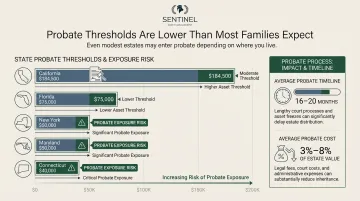
Because these thresholds are surprisingly low, even families who believe their estate is "too small" to worry about often face probate. The majority of Americans die without a valid will or trust, sending their estates directly into the probate system.
Estate Tax Strategies
The 2026 federal estate tax exemption is $15,000,000 per individual, meaning most families won't face federal estate taxes. However, seminars teach practical strategies to reduce or eliminate taxes and maximize wealth transfer:
- Properly structured trusts preserve both spouses' exemptions, effectively doubling the amount shielded from estate tax
- Annual gifts of up to $19,000 per recipient (2026) allow gradual wealth transfer during your lifetime without triggering gift tax
- Irrevocable Life Insurance Trusts (ILITs) keep life insurance proceeds out of the taxable estate entirely
- Charitable Remainder Trusts (CRTs) enable tax-deferred sales of appreciated assets while generating income for beneficiaries
- Qualified Personal Residence Trusts (QPRTs) transfer a home out of the taxable estate while the grantor retains the right to live in it for a set term
At Sentinel Asset Management, advisors focus on the financial coordination side of estate planning, working directly with accounts, insurance policies, and ownership structures. When more complex instruments are appropriate, SAM collaborates with estate attorneys to keep the overall plan cohesive and tax-efficient.
IRA and Retirement Account Beneficiary Planning
Naming the right beneficiary on tax-deferred retirement accounts can significantly extend tax-deferred growth — or destroy it through a poor choice. Beneficiary designations on retirement accounts pass directly to the named individual and legally supersede instructions in a will or trust.
The SECURE Act's Impact: The SECURE Act of 2019 eliminated the "stretch IRA" for most non-spouse beneficiaries, requiring the entire account balance to be withdrawn within 10 years of the account owner's death. This accelerates deferred income taxes, potentially pushing heirs into higher tax brackets.
Exceptions exist for Eligible Designated Beneficiaries (EDBs):
- Surviving spouses
- Minor children of the account holder
- Disabled or chronically ill individuals
- Individuals not more than 10 years younger than the IRA owner
Failing to name a beneficiary often results in the asset passing to the probate estate, triggering even faster payout rules and accelerating deferred income taxes.
Special Needs Planning
Special Needs Trusts (SNTs) are among the most consequential tools covered at these seminars. They allow families to provide for a disabled loved one without disqualifying that person from government benefits like Medicaid or SSI. In December 2024, approximately 7.4 million people received federally administered SSI payments, with 84% eligible based on blindness or disability.
Third-party SNTs offer three critical protections:
- Preserve the beneficiary's eligibility for needs-based government benefits
- Do not require reimbursement to the state for Medicaid expenses upon the beneficiary's death (unlike first-party SNTs)
- Allow families to fund supplemental care and quality-of-life enhancements beyond what government programs cover
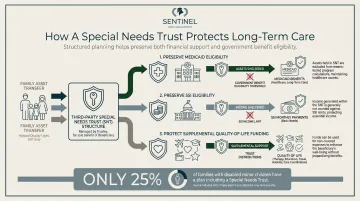
Despite their importance, only 25% of families with disabled minor children who indicate having a plan have one that includes a special needs trust. For many of these families, an SNT is the single most important document missing from their financial plan.
Sentinel Asset Management has 25 years of experience supporting families with special needs, understanding the financial complexities of maintaining government benefit eligibility while building long-term financial security. SAM coordinates with attorneys and care planners to ensure these specialized trust structures are properly integrated into the family's overall financial strategy.
Who Benefits Most from Attending?
This seminar addresses the specific planning gaps that affect three groups most often:
Pre-retirees and retirees (ages 50–70+)
66.1% of U.S. families own homes and 54.3% hold retirement accounts. If you own titled assets—a home, investments, bank accounts—and haven't formalized how those assets will transfer, you're exposed. Probate thresholds are low in many states, meaning even modest estates can get caught in the process.
Young parents
Only 36% of parents with children under 18 have an end-of-life plan, leaving most without legally named guardians. Contingency planning for sudden incapacity or death protects your children—regardless of how small your estate is.
Families with a loved one who has special needs
Third-party Special Needs Trusts protect both an individual's care and their eligibility for government assistance programs. An estimated 53 million U.S. adults provided unpaid care to someone with special needs in 2020—yet most caregiving families have no formal plan in place. Without one, a well-intentioned inheritance can disqualify a loved one from Medicaid or SSI overnight.
What Resources Are Typically Offered at These Seminars?
Most financial planning ministry seminars go well beyond a lecture. Attendees typically walk away with practical tools, documents, and reference materials they can use immediately.
Trust Documents at No Cost: Many FPM-affiliated seminars prepare revocable living trusts or special needs trust documents at no charge, removing the most common barrier to estate planning: upfront legal costs.
Plain-Language Educational Guides: Attendees receive checklists and guides covering:
- Which assets to fund into a trust
- How to title property correctly
- Common funding mistakes that render a trust ineffective
Live Q&A with Knowledgeable Speakers: Attendees can ask questions about their specific situation in a group setting, often surfacing questions they didn't know to ask.
Glossary of Key Estate Planning Terms: Estate planning comes with technical vocabulary — probate, successor trustee, pour-over will, certificate of trust. Seminars typically provide reference sheets attendees can keep and consult when working with their advisors later.
From Seminar to Strategy: Building a Complete Financial Plan
A financial planning ministry seminar equips families with vocabulary and urgency — but it can't account for each family's full financial picture. Retirement income needs, tax situation, investment risk tolerance, and long-term care planning all require individual attention that goes well beyond what a seminar can provide.
Connecting Estate Planning to Retirement Income Strategy
A living trust that distributes assets efficiently is only as valuable as the assets it holds. Families also need a coordinated investment strategy—including tax-efficient withdrawal sequencing and protection against market volatility—to ensure wealth actually reaches the people and causes they care about.
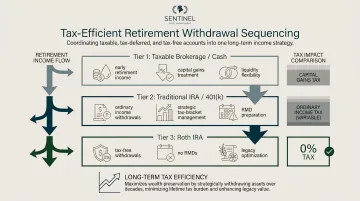
Tax-efficient withdrawal sequencing matters:
| Account Type | Recommended Withdrawal Order | Tax Rationale |
|---|---|---|
| Taxable Brokerage / Cash | First | Best source for early retirement living expenses; incurs capital gains rates rather than ordinary income tax |
| Tax-Deferred (Traditional IRA/401k) | Second | Withdrawals are taxed as ordinary income; accelerating withdrawals in low-tax years (pre-Social Security/RMD) can be advantageous |
| Roth IRA | Last | Withdrawals are tax-free and not subject to RMDs; highly advantageous to preserve for late retirement or to pass to heirs |
How Sentinel Asset Management Integrates Estate Planning with Comprehensive Financial Strategy
Sentinel Asset Management works with individuals and families to align their estate planning intentions with a comprehensive financial strategy. This includes:
- Personalized allocation models based on each client's investment goals, income needs, tax situation, and risk tolerance
- Structured withdrawal "buckets" that insulate against near-term cash flow fluctuations from market volatility
- Coordinated tax planning across the entire financial ecosystem—analyzing taxable, tax-deferred, and tax-free accounts as one cohesive plan
Every client portfolio is guided by an Investment Policy Statement and stress-tested under different market conditions — so the estate plan connects directly to the investment strategy, tax management approach, and income distribution plan.
Special Needs Planning Requires Integrated Expertise
For families with a loved one with special needs, the stakes around benefit eligibility make integrated planning essential. With 25 years of experience supporting these families, Sentinel Asset Management understands the financial complexities of maintaining government benefit eligibility while building long-term security. SAM coordinates with attorneys and care planners to ensure specialized trust structures are properly integrated into the family's overall financial strategy — protecting both the individual's care and their continued access to critical government programs like Medicaid and SSI.
How to Make the Most of a Financial Planning Ministry Seminar
A little preparation turns a seminar into a plan. Here's how to get the most out of it:
Take stock before you arrive. Know what you own — home, bank accounts, investments, retirement accounts, life insurance — and bring any existing documents (a prior will, beneficiary designation forms). The more clearly you can describe your situation, the more useful the guidance you'll receive.
Identify your three most pressing concerns. Whether it's protecting a spouse, providing for a child with special needs, or keeping assets out of probate, focused questions get focused answers.
Leave with a clear next step. Before you walk out, decide what action you're taking first:
- Getting a living trust prepared
- Updating beneficiary designations
- Meeting with a financial advisor to connect your estate plan to your retirement strategy
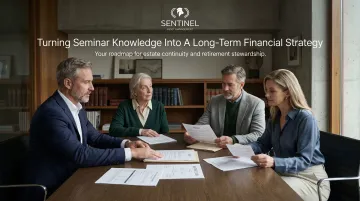
That last step matters most. The seminar opens the door — following through is what protects your family.
Frequently Asked Questions
What topics are typically covered at a financial planning ministry seminar?
Seminars typically cover living trusts vs. wills, probate avoidance strategies, estate tax reduction techniques, IRA beneficiary planning, and special needs trusts. Most focus on practical, actionable strategies rather than theoretical legal concepts.
Are financial planning ministry seminars free to attend?
Many seminars hosted by nonprofit organizations like Financial Planning Ministry are offered at no cost, and some even provide trust document preparation for free. However, this varies by event and host organization—confirm details when registering.
What is the difference between a will and a living trust?
A will requires probate before assets can be distributed, while a properly funded living trust bypasses probate entirely. This keeps the process private, faster, and less costly—often saving families 9 months to 2+ years of court delays.
Who should attend a financial planning ministry seminar?
Anyone who owns titled assets, has dependents, or wants to control how their estate is handled at incapacity or death would benefit—regardless of age or estate size. In most U.S. states, even modest estates can exceed the probate threshold.
What happens after I attend a seminar — is there follow-up support?
Working with a financial advisor after the seminar helps integrate your estate plan into a complete, personalized strategy covering retirement income, tax efficiency, and legacy goals.
How do I find a financial planning seminar near me?
Check with local churches, community organizations, or nonprofit estate planning groups. Look for events hosted by credentialed financial planning organizations in your state, or contact firms like Sentinel Asset Management that offer complimentary retirement income courses across Connecticut, Maryland, and several other states including New Jersey, Pennsylvania, Massachusetts, and beyond.
Take the next step in your financial journey by exploring our courses page for upcoming live seminars.